
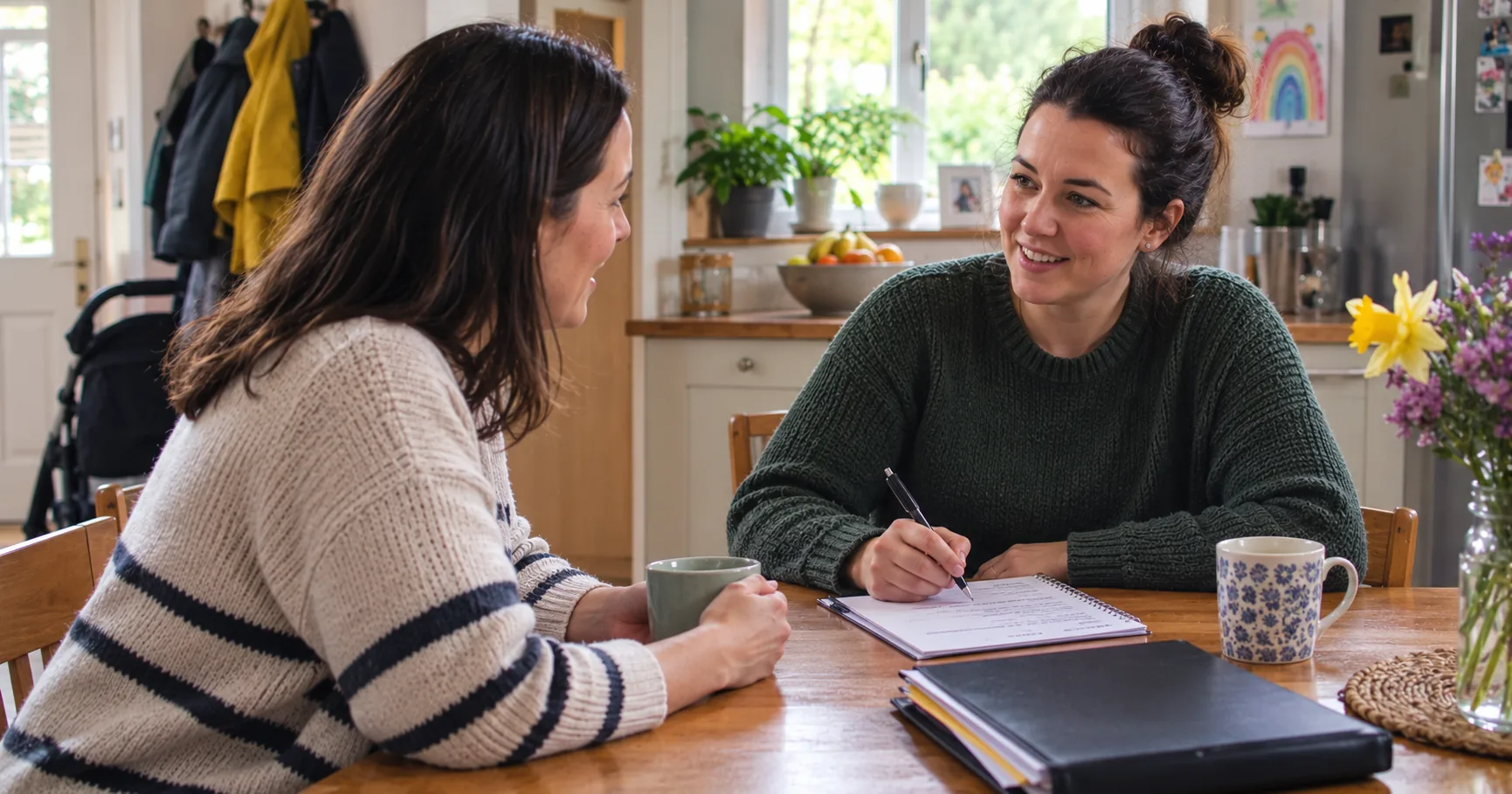
You have heard the word on every parenting WhatsApp group and half the creche waiting lists, but no one ever quite spells out what is a childminder in Ireland and how it differs from the other childcare options you are weighing up. If you are trying to work out whether a childminder is the right fit before you start ringing around, you are asking exactly the right question first.
The good news is that a childminder is easy to define once you strip away the jargon. The differences that actually matter for your family come down to a handful of concrete points.
Key Takeaways
– A childminder cares for your child in the childminder’s own home, usually in a small mixed-age group.
– Most childminders in Ireland are currently exempt from Tusla registration, but that is changing.
– Registration affects your National Childcare Scheme subsidy, not whether the arrangement is legal.
– A childminder differs from a nanny, a babysitter and a creche in setting, hours and cost.
What is a childminder, in plain terms
So what is a childminder, really? A childminder is a self-employed carer who looks after other people’s children in the childminder’s own home, for a fee, on a regular basis. That home setting is the single feature that separates a childminder from almost every other option, and it shapes the group size, the daily routine, and the price.
The simplest way to define childminder is by where the care happens. Most childminders take a small, mixed-age group rather than a room full of same-age children. Your toddler might share the day with a baby and a school-age child who arrives after 3pm. For many parents that home-from-home feel is the whole appeal, and it is why childminders remain one of the most common forms of paid care across Ireland.
Who is a childminder, and what does the role involve
Knowing what is a childminder in setting terms is one thing. Knowing who is a childminder day to day is another, and the role of a childminder is broader than “watching” children. A good childminder plans the day around your child’s needs, not just their own convenience.
What a childminder does day to day
Day to day, the job usually means:
- Preparing meals and snacks, and managing allergies or dietary needs
- Doing the school or creche run where that is part of the arrangement
- Leading play, outdoor time and age-appropriate activities
- Managing naps, routines and the small daily rhythms your child relies on
- Keeping you updated on how the day went
What a childminder is not there to do
What a childminder does not do matters too. A childminder is not a housekeeper, a tutor or an on-call babysitter for evenings out. The arrangement is defined care during agreed hours, which is exactly what makes it predictable and, for most families, easier to rely on than ad-hoc cover.
How a childminder is different from a nanny, babysitter or creche
This is where most parents get stuck, because the four options genuinely overlap. When parents ask what is a childminder versus a nanny or a creche, seeing them side by side helps.
| Option | Where care happens | Typical use |
|---|---|---|
| Childminder | The carer’s home | Regular daytime care, small group |
| Nanny | Your home | One-to-one care, your children only |
| Creche | A registered facility | Structured group care by age |
| Babysitter | Your home, occasional | Evenings and one-off cover |
A nanny comes to your house and cares only for your children, which is why a nanny usually costs more. Our nanny in Ireland hiring guide breaks down what that involves. A babysitter is occasional and informal by nature, while a creche is a larger, fully regulated setting.
A childminder sits in between: more personal than a creche, more affordable than a nanny, more consistent than a babysitter. If you are specifically comparing options in the capital, our rundown of childcare options in Dublin walks through the same trade-offs locally.
What Tusla registration means for a childminder
Here is the part most parents get wrong. Whether your childminder is registered with Tusla is not about whether the arrangement is legal. It is about money and oversight.
Under the 2024 Childminding Regulations, childminder registration opened in September 2024, with a three-year transition before it becomes mandatory for most. Right now a childminder is exempt from registration if caring for no more than three preschool children and no more than six children in total, including the childminder’s own. Those thresholds are set out in Tusla’s childminding guidance.
Why it matters to you: a registered childminder is Garda vetted, insured and eligible to accept the National Childcare Scheme subsidy. An unregistered childminder is currently operating legally, but you cannot claim NCS against their fees. So the registration question is really a subsidy question, worth asking directly and asking early.
There is a carer’s side to this too. A childminder is self-employed, and under Revenue’s Childcare Services Relief can earn up to €15,000 a year from minding in their own home before income tax applies on that income. It is worth knowing the framework your childminder works within, not just the fee you agree.
What a childminder should have in place
Registration is one signal, not the whole picture. Before you commit, a childminder worth hiring will be able to show you:
- Their registration status, and since when, or why they are exempt
- Garda vetting, arranged through a registered organisation
- A first-aid qualification and basic insurance
- Contactable references from past families
- A clear agreement on hours, fees and notice
None of this is about catching anyone out. A childminder who takes the role seriously will expect these questions and have the answers ready.
What is a childminder best suited to, and who should look elsewhere
A childminder suits you if you want regular, personal care in a home setting, a small group rather than a big room, and a cost that usually lands below a nanny. It suits your child if they do better with one consistent adult and a steady routine than with a larger, busier environment.
It may not suit you if you need one-to-one care in your own home, or fully flexible hours. That is nanny or babysitter territory. Cost also varies by area and hours, with no official rate card, so it is worth reading our honest breakdown of childminder rates in Ireland before you set a budget.
When you are ready to see who is available near you, you can find a Garda-vetted childminder on TrustedCarers.ie and compare real profiles against the points above, or read what to look for specifically among childminders in Dublin if that is your area.
Frequently asked questions
Q: What is a childminder in simple terms?
A: A childminder is a self-employed carer who looks after children in the childminder’s own home for a fee, usually in a small mixed-age group. The home setting is what separates a childminder from a nanny, a creche or a babysitter.
Q: Is a childminder the same as a nanny?
A: No. A childminder cares for children in the childminder’s own home, while a nanny works in your home and cares only for your children. That difference in setting is why a nanny typically costs more.
Q: Do all childminders have to register with Tusla?
A: Not yet. A childminder is currently exempt if minding no more than three preschool children and six children in total, and full registration is being phased in over a three-year transition period that began in 2024.
Q: How many children can a childminder mind at once?
A: Up to three preschool-age children and up to six children in total, counting the childminder’s own children, before Tusla registration is required.
Q: What is the role of a childminder day to day?
A: The role of a childminder covers meals, naps, play, outdoor time and often the school run, during agreed hours in the childminder’s own home. It does not usually include housekeeping, tutoring or evening babysitting.



Leave a Reply